

Training of HR and Management Teams
Running a successful business is about more than just selling products or services. It’s also about people – how they are treated, managed, and supported in the workplace. That’s where Human Resource (HR) and management staff come in. They play a big role in making sure the company runs smoothly and employees are happy, productive and disciplined fairly.

Questions About Sick Leave
Employees are entitled to six weeks of paid sick leave over a 36-month (3-year) cycle. This usually equates to 30 working days for employees who work a five-day week, or 36 days for those working a six-day week.

Why Employers Should Consult Experts for Staff Issues
Managing employees is one of the most important parts of running a business. There are strict labour laws that protect workers. If these laws are not followed correctly, a company can face serious problems – such as legal cases, fines, or damaged relationships with employees. That’s why it’s so important for employers to consult with experts when dealing with staff-related matters.

Domestic Workers
The national minimum wage is applicable to domestics and since March 2023 they have been brought up to par with the rest of the country’s workforce in respect to their minimum rate of pay – R28.79 per hour. This is in addition to the requirement that employers must register their domestic workers with the Unemployment Insurance Fund (UIF).

Understanding Retrenchment
Retrenchment is a difficult experience for both employees and employers. It happens when a company needs to reduce its workforce for reasons such as financial pressure, restructuring, or technological changes. To protect workers’ rights, South African labour law outlines a clear process that must be followed.

Department of Labour Inspections
In South Africa, the Department of Employment and Labour (DEL) plays an aggressive role in holding employers to account on the rights of workers and ensuring that businesses are compliant with labour laws. One of the key mechanisms employed by the DEL to fulfill its mandate is through compliance inspections. These inspections can often be disruptive to your business and complicated to deal with.

National Elections in South Africa
With national elections around the corner, government is pushing hard to champion the rights of employees. From radio advertisements encouraging employees to open cases at the CCMA and Department of Labour to putting pressure on Labour Inspectors to enforce the national minimum wage. There is a concerted effort to educate employees about their rights – but what about the rights of the employer and where do employers need to ensure that they are adequately protected?

Top 5 Mistakes Employers Make
Labour law compliance is essential for every business operating in South Africa. Failure to comply with the relevant legislation can lead to legal disputes, financial penalties, and damage to the company’s reputation. In this article, we will explore the top five mistakes businesses often make when it comes to labour law compliance and provide insights on how to avoid them.

Domestic Workers Workmen's Compensation Deadline
In South Africa, domestic workers have gradually gained increasing protection under labour laws. They are entitled to the National Minimum Wage (NMW) and have been brought in line with the rest of the country’s workforce since March 2022 with the current NMW (in June 2023) set at R25.42 per hour.

Employee Bonuses
As we approach the year end an important issue on both Employers’ and Employees’ minds is the subject of Bonuses. Most Employees are expecting that bit of extra money which they have already budgeted for. Large and prosperous businesses budget well in advance for bonus payments. However, due to financial difficulties, some small to medium sized businesses may not have the means to do so.

Trade Unions in the workplace
To most business owners, having their employees join a trade union is synonymous with betrayal.
The purpose of a trade union is to assist and represent employees in protecting their rights and to further their interests. Employees may seek membership with a trade union for various reasons, the most common of which are- the employee is unhappy in his or her workplace and feels the situation cannot be changed without outside influence.
Striking Employees
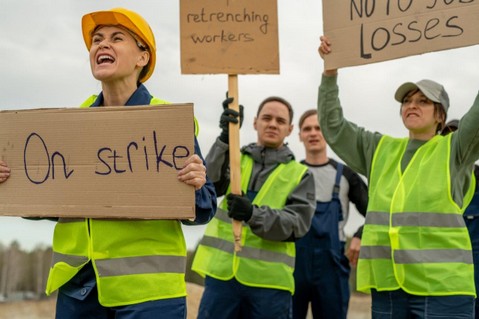
It’s on the news daily, employees of a certain company or a trade union have embarked on a strike, demanding higher wages, singing, dancing and waving their pickets. When an employer receives the 48-hour strike notice, panic usually sets in as the risks of operational shutdown and losses run through their mind. We know that protracted strikes can cripple any business in the current economic climate. Trade unions and political parties may try to capitalise on the emotions of employees, coaxing and manipulating employees into prolonged and sometimes violent strikes.

Employee Social Media use can have serious consequences
An increasing number of business owners and individuals are relying on and turning to social media for advertising, collaboration, marketing, recruiting and sharing of information. Many businesses use social media as a tool to increase productivity within their businesses for example with WhatsApp group chats that have become the norm now. Social media platforms like Facebook, YouTube, LinkedIn, Instagram and Twitter are used for advertising, branding and marketing with positive results for many businesses.

Retrenchments on the Rise
The South African economy has been tightening in the last year and it does not seem to be letting up for the individual and the business owner. Increasing fuel prices, increased sectoral determinations, inflation rates and taxes have plunged many once-thriving businesses into survival mode. Technological advances have lowered the barrier to entry in certain markets multiplying competitors daily who are offering similar products and services at half the price.
Can Retirement be Enforced?
Retirement, the end of an individual’s active working life, is a relatively new concept in the history of mankind. Before modern medicine, the average life expectancy was low, and most people generally worked until the end of their lives. Improved healthcare has gradually changed this, and now the average life expectancy continues to increase around the world. Retirement is now a crucial aspect of the employment relationship but is often overlooked to the detriment of business owners.

Drunk at Work
The festive season is near, and we know from experience that there is a rise in the incidents of intoxication at the workplace across all sectors. Alcohol and drug abuse will affect businesses as staff under the influence deter customers, make mistakes and cause damage to company property. You would think that if an employee is found to be intoxicated at work it would be a straightforward dismissible offence, but this is not always the case. Employers often operate under this mistaken belief to their detriment at the CCMA

Employing a foreign national
Since the inception of democracy in South Africa, there has been an increase in the number of foreigners entering the country looking for better career prospects, better opportunities or fleeing persecution in their home countries. Many foreign nationals have travelled to the country and attained the necessary documentation to live in the country legitimately. On the other hand, some foreign nationals have entered the country illegally and many foreign nationals have remained in the country illegally after the expiration of their work permits.

How many written warnings should be issued before dismissal?
Very often employees assume that the employer must issue them with three warnings before they can be dismissed for misconduct. This misconception is shared with many employers as well because it has been preached to us repeatedly for as long as we can remember. What you don’t know is that this is simply not the case.
Warnings, counselling and staff training have all been implemented over the years in an attempt to enlighten and assist the workforce.

Disciplinary Hearings and the CCMA
There are two questions that are asked at the CCMA in the case of a dismissal. First, was the dismissal procedurally fair? Second, was the dismissal substantively fair? Plainly said, they need to know if you followed the procedure for a dismissal and if the reason for the dismissal or the employee’s actions were serious enough to justify a dismissal.

Absenteeism and Late Coming Employer's Frustration
It is an implicit duty of every employee to be present at work and to be on time. Yet every employer has experienced some form of absenteeism or late-coming from its workforce. The issues of absenteeism and late-coming may be extended to other time-keeping offences such as leaving work early; lunch or toilet breaks etcetera.

Leadership Through Discipline
As an employer or manager, you are required to use your leadership skills to get the best out of your staff. Showing leadership requires you to make tough decisions for the well-being of the business during stressful situations.
Enforcing the Basic Conditions of Employment Act
Has your business been visited by the Department of Labour? Can a Labour Inspector visit your business without permission or warning?

The Employment Contract
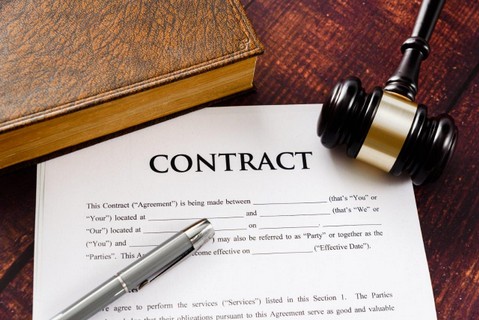
There are many employers who avoid employment contracts and choose not to formalise the employment relationship. However, in terms of the Basic Conditions of Employment Act (BCEA), an employer is obligated to provide the employee with a written contract of employment.

Labour Law - A Brief Overview
Each and every year, new labour laws are created, and old laws are amended or abolished. As ordinary citizens, business owners and employees, it’s hard to understand these laws let alone keep abreast of current changes and amendments. Hence, we will be providing you with a basic understanding of the law and urge you to contact us with any labour query or issue that you may have.

Work on Sundays and Public Holidays
April is a month full of public holidays which allows us to spend more time with our loved ones. Unfortunately, not everyone can relax at home with their families on public holidays. Business owners and employees in the retail, security, medical and hospitality sectors, amongst others, must keep the engine running even during public holidays so that the rest of us can benefit from the services and products they provide.

Understanding the Types of Leave in SA

Deductions from Wages and Salaries
Do you know what the rules are about deductions from wages and salaries? Can deductions be made without consulting the employee? In our previous article we explained the types of leave employees are entitled to as detailed in the Basic Conditions of Employment Act 75 of 1997 (BCEA). In this article we will discuss deductions from the wages of an employee in respect of the BCEA and Labour Law.

Parental Leave Explained
Parental Leave, Adoption Leave, Commissioning Parent Leave, these are the new types of leave granted to employees but what are the rules about using these types of leave? In our previous article we mentioned the different types of leave that can be used by an employee as detailed in the Basic Conditions of Employment Act 75 of 1997 (BCEA). We mentioned and briefly explained about Annual Leave, Sick Leave, Family Responsibility Leave and Maternity Leave.

Understanding the Basics of Working Hours
In our previous article we mentioned that South Africa’s primary pieces of labour legislation are the Basic Conditions of Employment Act 75 of 1997 (BCEA) and the Labour Relations Act 66 of 1995 (LRA). We can consider the abovementioned legislation to be a broad framework within which the employment contract exists as a specific application within the ambit of the law for a specific position of employment. Suffice it to be said that the contract of employment is a very important document for the employer and the employee.